Why We Perform Leak Testing on Every Vehicle – The Other Half of Engine Health
At EagleTuning, our mission is simple: to provide the most professional, reliable, and safe performance upgrades in the industry. That’s why every single vehicle that comes into our shop for tuning undergoes both a compression test and a leak (smoke) test. These two diagnostic procedures are the foundation of our pre-tuning evaluation. They are inseparable. One tells us how well the engine holds pressure internally — the other tells us where pressure might be escaping externally.
In short, why we perform leak testing for engine health is not just a technical formality — it’s a philosophy rooted in doing the job right.
What Is a Leak Test?
A leak test, commonly referred to as a smoke test, involves introducing non-toxic smoke into the intake or vacuum system while the engine is off. This helps us visually detect even the smallest leaks in hoses, seals, gaskets, and fittings that may otherwise go unnoticed during normal driving or basic inspections.
Using specialized equipment, we pressurize the intake tract with smoke and watch for any signs of vapor escaping. This is especially important for turbocharged engines, where even a tiny leak can throw off boost control, air-fuel ratios, and timing.
Why We Perform Leak Testing for Engine Health
If an engine has vacuum leaks, boost leaks, or faulty seals:
- It cannot maintain proper AFRs (air-fuel ratios)
- It may run lean under load, which is dangerous for pistons and valves
- The turbo may overwork to compensate for missing pressure
- It could cause idle issues, misfires, and throttle hesitation
This is exactly why we perform leak testing for engine health: to eliminate variables that could lead to poor tuning results or mechanical failure. Imagine tuning a car and increasing boost, only to find the intercooler piping is cracked — the car runs lean, misfires under WOT, and risks engine damage. We don’t take that chance.
The Connection Between Leak Tests and Compression Tests
Compression testing tells us if the internal components of your engine — pistons, rings, valves, and gaskets — are sealing properly inside the combustion chamber. Leak testing tells us if the external air pathways — the intake manifold, vacuum lines, PCV system, charge pipes — are sealing as they should.
You can’t have a full picture without both. Why we perform leak testing engine health evaluations alongside compression testing is because together they tell the whole story:
- Does the engine hold pressure internally? (Compression test)
- Does it hold pressure externally? (Leak test)
Only when both tests pass do we proceed with tuning.
What We Commonly Discover
During leak testing, we frequently uncover issues such as:
- Cracked intercooler pipes
- Loose or deteriorated vacuum lines
- Failing intake manifold gaskets
- Improperly installed aftermarket parts (e.g., diverter valves, catch cans)
- Boost control solenoid leaks
These problems may not trigger fault codes — but they absolutely impact tuning safety and performance.
Examples by Brand
- BMW F-Series (e.g., 335i N55): Common leaks at the chargepipe throttle body or diverter valve
- Volkswagen / Audi 2.0 TSI: PCV and intake manifold gasket leaks are frequent
- Mercedes M274 / M276: Known for vacuum leaks at turbo inlets or cracked Y-connectors
Identifying these issues early is a cornerstone of our commitment to safe and accurate tuning.
Included in Our $199 Pre-Tuning Diagnostic Package
At EagleTuning, both the compression test and the smoke leak test are included in our mandatory $199 diagnostic package. It’s not an upsell — it’s a safety protocol.
If you’re wondering why we perform leak testing engine health checks before tuning, it’s because we care more about long-term performance and reliability than shortcuts. We document every issue and give customers full visibility before proceeding.
Why Most Shops Don’t Bother (And Why We Do)
The truth is, many tuning shops skip leak testing. It takes extra time, requires specific tools, and doesn’t generate immediate revenue.
But we’re not most shops. We’d rather spend 45 minutes now finding a vacuum leak than waste hours troubleshooting misfires later — or worse, risking engine failure after tuning.
Our Policy
- Every vehicle receives a full smoke-based leak test
- This is always paired with a compression test
- No tuning is performed unless both tests are passed
- The total fee is $199 — flat rate
This is the EagleTuning standard. It’s why our clients trust us and recommend us.
Conclusion
Why we perform leak testing engine health assessments isn’t just about diagnostics — it’s about responsibility. When you bring your vehicle to EagleTuning, you’re not just buying horsepower — you’re buying peace of mind.
Compression + Leak Testing = Smart Tuning.
That’s the EagleTuning way.
Don’t let hidden problems sabotage your build. Know your engine. Then tune it — professionally.
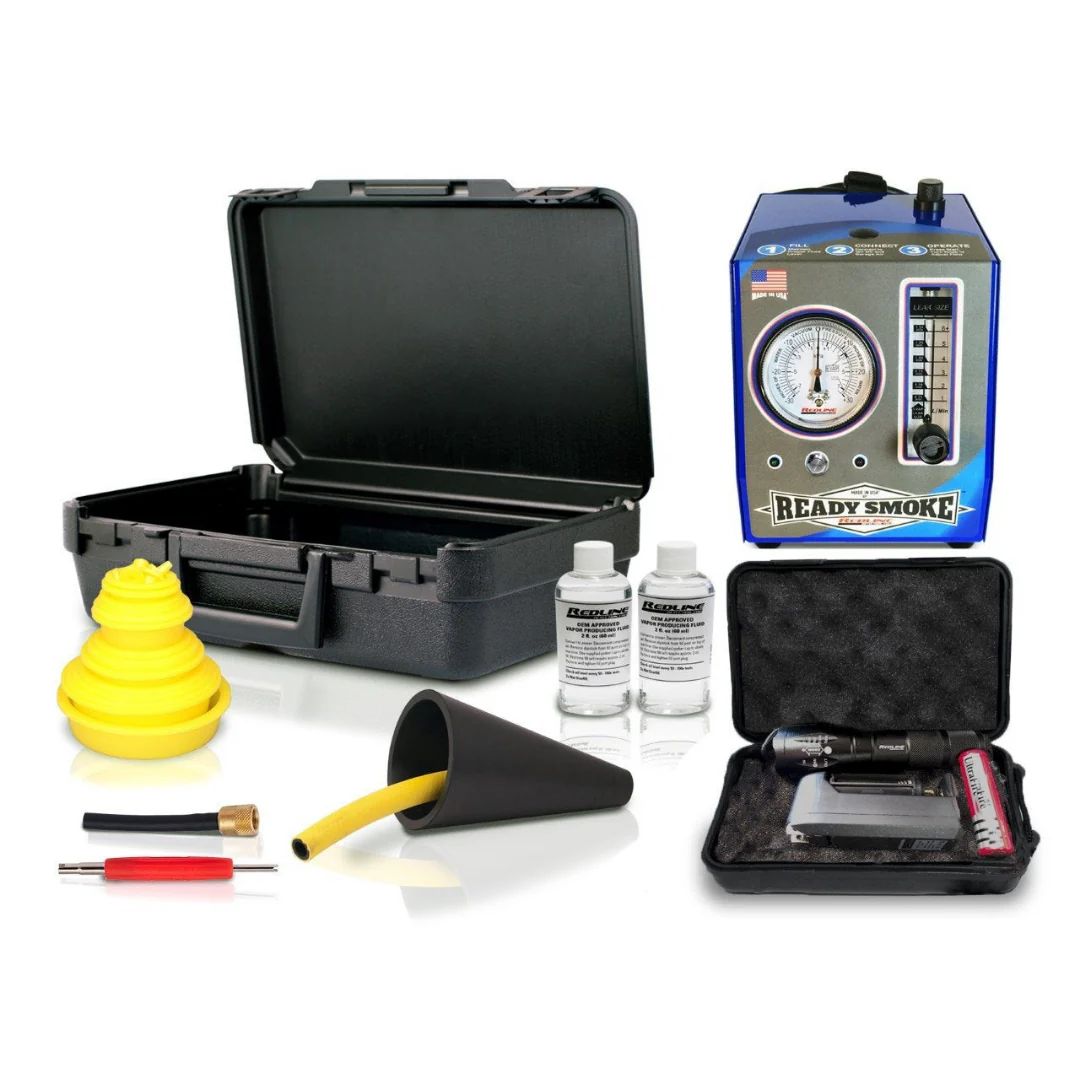
At EagleTuning, we rely on the ReadySmoke™ Leak Detection System by Redline Detection (Part No. 95-0400) to perform precise and reliable smoke-based leak testing on every vehicle. This professional-grade tool allows us to detect even the smallest vacuum, boost, and EVAP leaks across the intake system, charge pipes, PCV lines, and more. Unlike cheap or improvised setups, the ReadySmoke system delivers clean, mineral-oil-based vapor with consistent pressure — ensuring that no leak goes undetected. By using this trusted equipment, we’re able to diagnose hidden issues that could compromise tuning safety or performance before they cause damage.