Which BMW 3 Series Is Actually the Best?
If you ask ten BMW enthusiasts which 3 Series is the best, you’ll probably get ten different answers. Some will say the E30 without even thinking, others will defend the E46 passionately, and some will argue that the modern ones are objectively better in every measurable way. The truth is, every generation of the 3 Series reflects not just BMW’s engineering progress, but also how our expectations of cars have changed over time.
That’s what makes this question interesting — and that’s why we decided to walk through the generations and talk about what each one really felt like, not just what it offered on paper.
It all started with the E21 in the mid-1970s. This was the car that created the 3 Series identity. Before that, BMW had great cars, but the E21 is where the idea of a compact, sporty, premium sedan really became a thing. The design was clean, elegant, and surprisingly modern for its time. The slightly forward-leaning nose, the simple lines, and especially the driver-oriented cockpit already showed what BMW was about. Everything inside was angled toward the driver. You didn’t feel like a passenger in your own car — you felt like the pilot.
Then came the E30, and that’s where things turned into legend. There’s something about the E30 that still feels right, even decades later. The proportions are perfect, the kidney grilles are small and elegant, the lines are simple but strong. It’s not overloaded with technology, it doesn’t try too hard, and it doesn’t age. It just works. The steering feel, the mechanical feedback, the lightness — it all creates a connection that modern cars rarely offer. That’s why, for so many people, the E30 is not just the best 3 Series, but one of the best BMWs ever built.
When the E36 arrived, it felt like BMW stepping into the modern world. The design became more rounded and aerodynamic, the interior became more refined, and safety and comfort moved up a level. Some people felt it was less “raw” than the E30, but many loved it for exactly that reason. It kept the sporty character but added maturity. It felt like the 3 Series growing up — still fun, still engaging, but more usable as an everyday car.
The E46 is where many believe BMW found the perfect balance. It combined the timeless elegance of the older cars with just enough modern technology to feel contemporary without being overwhelming. The design still looks good today. The interior still feels focused on the driver. The engines were strong, smooth, and full of character. If you released the E46 today with modern safety updates, most people wouldn’t even question it. It simply feels right.
Then came the E90, and that’s where the shift became noticeable. Technically, it was better in almost every way. It was stiffer, safer, faster, and more advanced. But emotionally, something started to change. The interior lost that strong driver-focused feeling, the design became more aggressive and less elegant, and screens started to take over. It was still a great car — just a different kind of great.
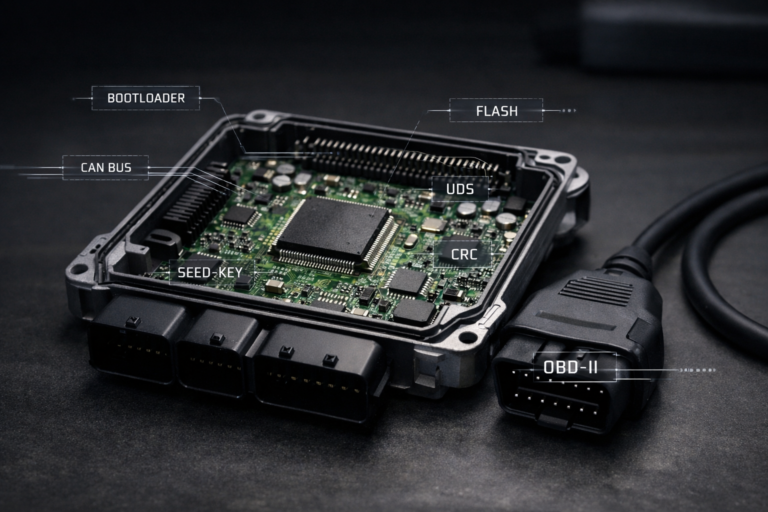
Interestingly, this is also where tuning really started to feel transformative again. The E90 sits in that sweet spot where the car is still mechanical and engaging, but the ECU strategy is advanced enough that calibration makes a dramatic difference. Especially on the 335i with the N54 twin-turbo engine, the platform became famous for how well it responds to tuning.
At EagleTuning, when someone asks about “Stage 1, Stage 2, Stage 3,” we always start by saying this: it’s not a ladder, it’s a recipe. It’s about how much power you want, how much heat you’re willing to manage, and how far you want to go with supporting hardware.
On an E90, Stage 1 is where the car stays visually stock and OEM-like, but feels completely different from the driver’s seat. Throttle response sharpens, torque fills in earlier, and the whole car feels more awake. No major hardware changes are mandatory, but we always pay attention to known weak points like charge pipes, cooling efficiency, and plug condition.
Stage 2 is where you start freeing up airflow and controlling temperature properly. Downpipes and improved intercooling become important because once you hold higher boost for longer, the factory cooling simply runs out of headroom. The difference isn’t just peak power — it’s that the car stays strong on the third pull, not just the first.
Stage 3 is where the E90 stops being “a tuned car” and starts being a build. Turbo system, fueling strategy, and heat management become one integrated plan. That’s how you end up with an E90 that doesn’t just feel fast once, but stays fast every time you drive it hard.
The F30 continued BMW’s move toward refinement. It became quieter, more comfortable, more digital, and more insulated. But tuning brings back the urgency the chassis deserves. Whether it’s an N20, N55, or B58, the philosophy stays the same: Stage 1 wakes the car up while keeping everything simple and OEM-friendly. It’s the best choice for daily drivers who want more life without more complexity.
Stage 2 on the F30 is about airflow and heat again — high-flow exhaust components and better cooling so the car can actually sustain the extra power. Done properly, Stage 2 doesn’t just make the car faster; it makes it more consistent.
Stage 3 is where turbo upgrades and fueling strategies come into play. At that point, we’re no longer flashing a file — we’re building a system.
And then we arrive at the G20. On a technical level, it’s incredible. The chassis is excellent, the engines are extremely capable, the safety and technology are far beyond anything before it. It’s faster, more efficient, and more stable than any previous 3 Series. But it also represents the final transformation: from a mechanically focused driver’s car into a digitally optimized performance machine.
That changes how tuning works too. ECU security, emissions systems, and regional differences mean planning matters more than ever. Stage 1 is the sweet spot for most G20 owners: massive gains in usable torque, no drama, no hardware complexity, and the car still feels factory-smooth — just stronger everywhere.
Stage 2 is where hardware and legality intersect. Exhaust flow, particulate filters, cooling, and fueling options all become part of the conversation. There is no universal recipe anymore — every car has to be evaluated individually.
Stage 3 is for people who want the G20 to be a real performance weapon. Turbo upgrades, fueling headroom, and thermal stability all have to be solved together if you want the car to be consistently fast, not just impressive on a dyno chart.
That’s really the core of the EagleTuning philosophy. A lot of tunes feel amazing for the first pull and then fall apart — timing drops, intake temperatures rise, torque closures happen, and suddenly the car feels inconsistent. Our goal is never just “make a big number.”
It’s repeatable power, clean torque control, predictable drivability, and a setup that matches the car’s real hardware and real usage.
So which BMW 3 Series is the best?
If you ask us emotionally, it’s still the E30. It’s the purest expression of what the 3 Series was meant to be. If you want the perfect balance between old-school BMW character and modern usability, the E46 is incredibly hard to beat. And if you want the fastest, safest, most capable 3 Series ever built, that’s clearly the G20.
In the end, the “best” 3 Series depends on what you value most: connection, balance, or capability.
And that’s what makes this question timeless.