

The Comprehensive Guide to Airbags: History, Mechanics, and Life-Saving Safety Practices
At Eagletuning, we live and breathe performance. From Stage 1 tweaks to pushing the limits with Stage 2 and even our ultra-performance Stage 3 programs, we’re dedicated to unlocking your vehicle’s true potential. But we firmly believe that incredible power must go hand-in-hand with uncompromising safety. While we fine-tune engines and optimize handling for thrill and speed, we never lose sight of the crucial systems designed to protect you in critical moments. That’s why understanding features like airbags – their power, their function, and their proper use – is essential for every performance enthusiast. Let’s explore these life-saving devices.
The Raw Power: Visualizing Airbag Force
It’s vital to grasp the immense force an airbag deploys with. While often perceived as a soft cushion, they are powerful safety systems. Demonstrations, sometimes using objects like watermelons, vividly show this force – the object is often completely destroyed upon impact. This isn’t just for show; it’s a necessary visual to convey the power involved and underscore why correct usage is critical. The impact seen in such tests isn’t a secondary collision; it’s the direct force of the bag itself. Furthermore, timing is paramount. Airbags deploy in milliseconds, and any delay, or an occupant moving too quickly towards the bag, can drastically alter the outcome, potentially reducing effectiveness or even causing injury.
Perceptions vs. Reality, and the Journey to Now
Common Misconceptions: Many people still think of airbags as soft cushions, perhaps made of gentle materials. The reality is a robust, precisely engineered system.
Historical Rollout: Their adoption wasn’t overnight. In places like Turkey, they began appearing around 1994, typically starting with the driver’s side. Adding passenger airbags presented new challenges.
The Mechanism: At its core, an airbag system uses sensors to detect severe, sudden deceleration. This triggers a ‘squib’ – a small pyrotechnic device – initiating a chemical reaction that rapidly inflates the bag with gas.
Early Patents & Compressed Air: The idea dates back further than most imagine. The first patent emerged in 1919 from two dentists, though their concept relied on impractical compressed air and a bike pump. German and American inventors also explored compressed air in the 1950s. However, these systems couldn’t inflate fast enough due to the challenges of storing and rapidly releasing large volumes of high-pressure air.
Testing and First Vehicles: Early crash safety research, sometimes linked to aviation G-force studies, unfortunately, used cadavers before advanced crash-test dummies became available. Ford built experimental airbag cars in 1971, and GM followed with a government fleet in 1973. The Oldsmobile Tornado holds the title of the first car sold to the public with an airbag.
European Adoption: Mercedes-Benz was instrumental in bringing airbags to Europe, especially with its S-Class, continuing its tradition of pioneering safety features like ABS and ESP.
How They Decide to Deploy: Working Principle and Sensors
System Evolution: Airbag control units have evolved from simple electromechanical switches to complex Electronic Control Units (ECUs), often integrated with ABS and ESP.
Deceleration is Key: Airbags deploy based on the rate of deceleration, not necessarily the impact speed itself. A sudden, sharp stop (like hitting a solid barrier) triggers them. This is why a high-speed impact with a deformable object might not trigger them, while a lower-speed impact with something immovable might.
Non-Deployment Scenarios: Airbags won’t, and shouldn’t, deploy in every incident. Milder impacts, certain impact angles, or sensor issues can prevent deployment if the critical deceleration threshold isn’t met.
Sensor Advancement: Modern sensors are sophisticated, akin to smartphone accelerometers. They’ve moved beyond simple mechanical switches to complex electronic systems that can analyze impact forces and angles much more accurately.
The User Manual: Correct Usage and Critical Dangers
The Unbreakable Rules: Not wearing a seatbelt and incorrectly placing children in the front seat are among the most dangerous mistakes. Rear-facing child seats in the front are especially hazardous unless the airbag is off. Tragic accidents serve as stark reminders.
Understanding Thresholds: Manufacturers often provide speed thresholds (e.g., 33 km/h) to simplify the concept, but the core trigger remains severe deceleration. Bumpers also play a part, designed to absorb low-speed impacts (up to ~15 km/h) without triggering airbags.
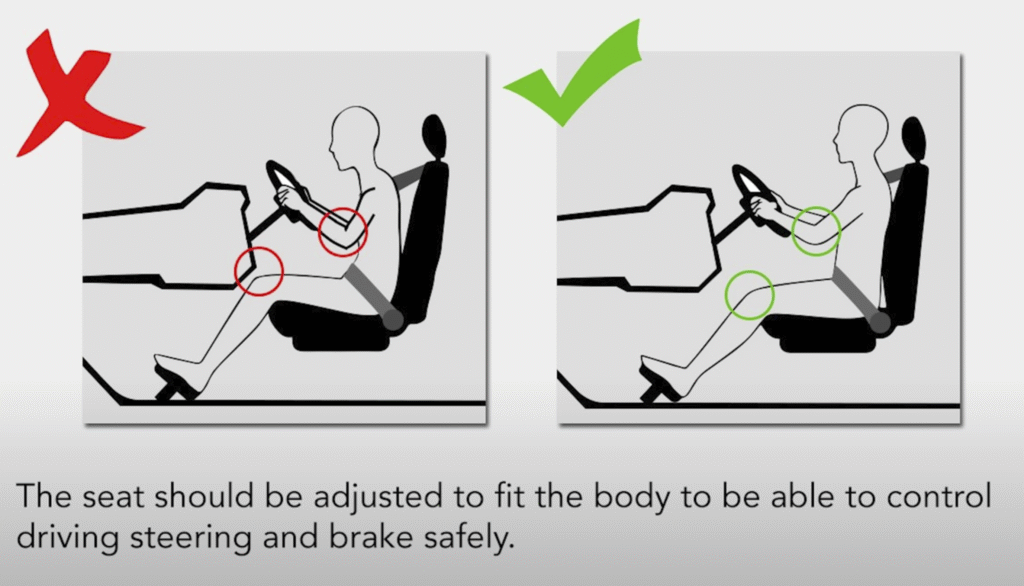
The 25-30 cm Rule: This is absolutely vital. Drivers and passengers must maintain a minimum distance of 25-30 cm (about 10-12 inches) from the airbag module (steering wheel or dashboard). Sitting closer means you risk severe injuries, like broken ribs, from the force of the deploying bag itself.
Timing & Positioning: Even slight delays in deployment or the occupant moving forward too fast can lead to injury. Proper seating posture and holding the steering wheel at the 9-3 position are crucial. Incorrect hand placement can result in broken arms or hands being forced into the face.
Deployment & Deflation: You don’t hit an inflating bag; you hit a fully inflated one that is already starting to deflatethrough built-in vents. This deflation is crucial for cushioning. Hitting it too early is like incorrect engine timing – it can cause harm.
Seatbelts – The Essential Partner: Your seatbelt keeps you positioned correctly, allowing the airbag to do its job. It prevents you from being thrown forward violently into the deploying bag.
Children & Lap-Riding: Never hold a child on your lap in the front seat. The force is enough to cause severe or fatal injuries to a child.
Feet on the Dashboard: This is incredibly dangerous. A deploying passenger airbag will violently throw legs and knees upwards, causing horrific injuries to legs, hips, and even the face.
Other Essential Airbag Knowledge
Synergy with Seatbelts: It bears repeating – airbags are a supplemental restraint system. They are designed to work with seatbelts, not replace them.
Modern Multi-Airbag Systems: Cars today have numerous airbags (front, side, curtain, knee). While these offer incredible protection, they are not an excuse to push driving limits.
Child Seats & Passenger Airbags: If you must place a rear-facing child seat in the front passenger seat, the passenger airbag must be deactivated. Follow your vehicle and child seat manuals precisely.
Deployment without Seatbelts: Whether an airbag deploys without a seatbelt depends on the car’s age and system. Many modern cars factor seatbelt use into their deployment logic (e.g., deploying differently or not at all).
The Takata Recall: This massive recall highlighted the danger of faulty inflators, which could rupture and spray shrapnel. It’s a reminder that these components can fail.
Airbag Maintenance & Lifespan: Airbags don’t last forever. They have a lifespan (check your owner’s manual), and their chemical components can degrade. Regular inspections and addressing recalls are essential.
Conclusion: Taking Airbags Seriously
Airbags are a phenomenal piece of safety engineering. They sit silently, waiting, hoping never to be needed. But if that moment comes, understanding how they work, respecting their power, and – above all – using your seatbelt and maintaining a proper seating position can mean the difference between walking away and a tragedy. At Eagletuning, we encourage you to enjoy the performance, but always prioritize safety. Treat these systems with respect, stay informed, and drive safely.